Publications & mediaNgā Pāpāho
The CfSC publishes research reports, articles, books and documentaries/films on a range of important issues relating to social change and communication which have been themed below.
Environment and social change
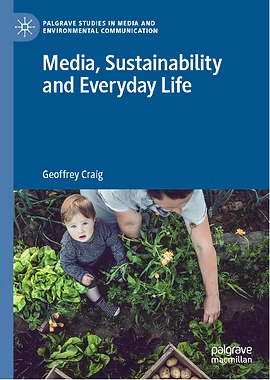
Media, Sustainability and Everyday Life
Geoff Craig. This book analyses representations of sustainable everyday life across advertising, eco-reality television, newspapers, magazines and social media. It foregrounds the discursive and networked basis of sustainability and demonstrates how such media representations connect the home and local community to broader political, social and economic contexts. The book shows how green lifestyle media negotiate issues of sustainability in varying ways, reproducing the logic of existing consumer society while also sometimes providing projections of a more environmentally friendly existence. In this way, the book argues that everyday lifestyles are not an irredeemable problem for environmentalism but an important site of environmental politics.

The NZ ad industry wants to clean up its climate act – but will agencies drop their fossil fuel clients?
Matt Halliday (2023). At the launch of the Auckland Climate Festival last month, Green Party Auckland Central MP Chlöe Swarbrick spoke about how building a community is the best way to avoid being overwhelmed by the scale of the climate emergency.
Advertising might not have been the first thing on Swarbrick’s mind. But earlier in August, New Zealand’s Commercial Communications Council had announced its own community initiative to address emissions within the advertising sector.
Labelled Ad Net Zero, it’s part of an international framework launched in the UK late in 2020. “Our ambition,” it states, “is to reduce the carbon impact of developing, producing and running advertising.” Read more
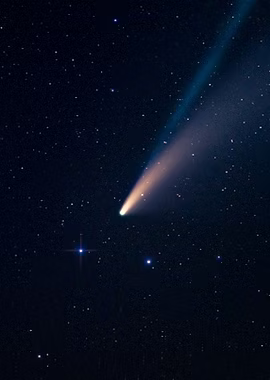
Representations of environmental apocalyptic horror in Greenland (2020)
Amanda Rutherford (2022). The existential threat to Earth in Greenland (2020) offers this apocalyptic film as a symbolic and threatening reflection of present-day concerns surrounding the continuation of life and societies in a rapidly changing ‘infected’ world. Clearly, some lives are deemed more valuable than others, leaving the weaponised individuals ahead of the rest. This chapter serves to explore the disturbing themes of death, where modern-day anxieties surrounding the ‘value’ and discrimination of life are found within times of crisis. It also examines how Greenland poses as a metaphor of present-day climate change and environmental concerns.
In S. Baker, A. Rutherford, R. Pamatatau. (Eds.). Contemporary horror on screen. Springer Nature.

The UN chief has called for a ban on fossil fuel advertising – is the NZ industry listening?
Matt Halliday (2024). Can we imagine a world without fossil fuel advertising, let alone fossil fuels themselves? That was essentially the question posed by United Nations Secretary General António Guterres this week.
Calling the coal, oil and gas industries the “godfathers of climate chaos”, who had “shamelessly greenwashed” environmental issues through lobbying, legal action and advertising campaigns, he said:
I urge every country to ban advertising from fossil fuel companies. Read morePolitics and social change
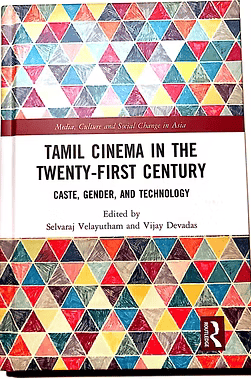
Tamil Cinema in the 21st Century: Caste, Gender, Technology
Selvaraj Velayutham & Vijay Devadas (eds) 2021 Tamil Cinema in the 21st Century: Caste, Gender, Technology. Routledge, London and New York.

The Indigenous Mediascape in Aotearoa/New Zealand
Hokowhitu, B. (2013). The Indigenous Mediascape in Aotearoa/New Zealand’, in The Fourth Eye: Māori Media in Aotearoa New Zealand. Hokowhitu, B. and Devadas, V. (eds). University of Minnesota Press, Minnesota: xv-l (36 pages)

The Purge: violence and religion as a toxic cocktail.
Rutherford, A. & Baker, S. (2021). The Purge: violence and religion as a toxic cocktail. In T. Platts (ed). Blumhouse Productions: The New House of Horror. Palgrave.

Bordering the Screen: Separation themes in popular film and television.
Rutherford, A. and Baker, S. (2021). Bordering the Screen: Separation themes in popular film and television. In J. Sarkar & A. Munshi (Eds.). Border and Bordering: Politics, poetics, precariousness. Netherlands: Ibidem Press.
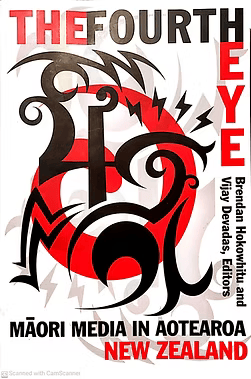
The Fourth Eye: Māori Media in Aotearoa New Zealand
Brendan Hokowhitu & Vijay Devadas (eds) 2013 The Fourth Eye: Māori Media in Aotearoa New Zealand. University of Minnesota Press, Minnesota.
Gender and social change
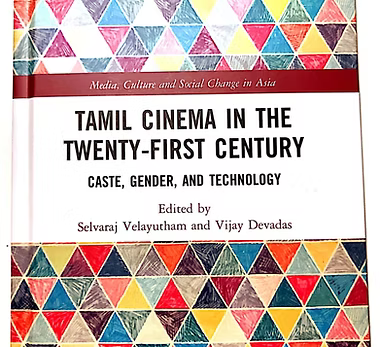
Tamil Cinema in the 21st Century: Caste, Gender, Technology.
Selvaraj Velayutham & Vijay Devadas (eds) 2021 Tamil Cinema in the 21st Century: Caste, Gender, Technology. Routledge, London and New York.

Becoming unstuck: The emotional challenges of researching women’s experiences of intimate financial violence
Vogels, C., & Scott, A. (2021). Becoming unstuck: The emotional challenges of researching women’s experiences of intimate financial violence. Women's Studies, 50(5), 498-515. doi:10.1080/00497878.2020.1861454

The Disney ‘princess bubble’ as a cultural influencer
Rutherford, A. & Baker, S. (2021). The Disney ‘princess bubble’ as a cultural influencer. MC Media Culture Journal, 24(1).
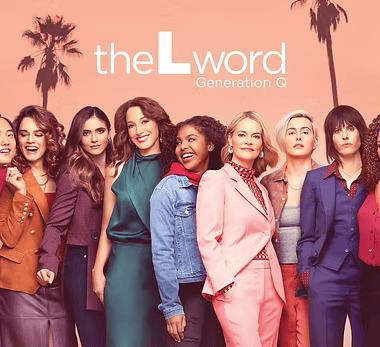
The L Word Generation Q.
The L Word Generation Q. Baker, S. & Rutherford, A. (2020). The L Word Generation Q. MC Media Culture Journal, Exclusion, 23(6).

With a ‘tradwife’ starring in Married at First Sight, a nostalgic vision of womanhood takes centre stage.
Vogels, C. (February, 2025). With a ‘tradwife’ starring in Married at First Sight, a nostalgic vision of womanhood takes centre stage. The Conversation. Read more

A Feminist and “Outsider” in the Field: Negotiating the Challenges of Researching Young Men.
Vogels, C. (2019). A Feminist and “Outsider” in the Field: Negotiating the Challenges of Researching Young Men. International Journal of Qualitative Methods, 18. doi:10.1177/1609406919855907

(Un)Knowing the rules of the game: Young men’s precarious talk about “territory marking” in rural Aotearoa/New Zealand
Vogels, C. (2019). (Un)Knowing the rules of the game: Young men’s precarious talk about “territory marking” in rural Aotearoa/New Zealand. Rural Sociology, 85(1), 190-212. doi:10.1111/ruso.1227
Māori, Pacific and social change
The Fourth Eye: Māori Media in Aotearoa New Zealand
Brendan Hokowhitu & Vijay Devadas (eds) 2013 The Fourth Eye: Māori Media in Aotearoa New Zealand. University of Minnesota Press, Minnesota.
The UN chief has called for a ban on fossil fuel advertising – is the NZ industry listening?
Matt Halliday (2024). Can we imagine a world without fossil fuel advertising, let alone fossil fuels themselves? That was essentially the question posed by United Nations Secretary General António Guterres this week.
Calling the coal, oil and gas industries the “godfathers of climate chaos”, who had “shamelessly greenwashed” environmental issues through lobbying, legal action and advertising campaigns, he said:
I urge every country to ban advertising from fossil fuel companies. Read more
Governing Indigenous Sovereignty: Biopolitics and the ‘Terror Raids’ in Aotearoa’
Devadas, V. (2013). Governing Indigenous Sovereignty: Biopolitics and the ‘Terror Raids’ in Aotearoa’, in The Fourth Eye: Māori Media in Aotearoa New Zealand. Hokowhitu, B. and Devadas, V. (eds). University of Minnesota Press, Minnesota: 3-24.
Popular culture and social change
Tamil Cinema in the 21st Century: Caste, Gender, Technology
Selvaraj Velayutham & Vijay Devadas (eds) 2021 Tamil Cinema in the 21st Century: Caste, Gender, Technology. Routledge, London and New York.

“There’s no reason he needs to come in on that”: Defining territory marking by watching Australia’s Bachelor in Paradise.
Vogels, C. (2020). “There’s no reason he needs to come in on that”: Defining territory marking by watching Australia’s Bachelor in Paradise. Feminist Media Studies, 22(2), 205-220. doi:10.1080/14680777.2020.1803943
Bordering the Screen: Separation themes in popular film and television.
Devadas, V. (2013). Governing Indigenous Sovereignty: Biopolitics and the ‘Terror Raids’ in Aotearoa’, in The Fourth Eye: Māori Media in Aotearoa New Zealand. Hokowhitu, B. and Devadas, V. (eds). University of Minnesota Press, Minnesota: 3-24.
The Fourth Eye: Māori Media in Aotearoa New Zealand
Brendan Hokowhitu & Vijay Devadas (eds) 2013 The Fourth Eye: Māori Media in Aotearoa New Zealand. University of Minnesota Press, Minnesota.
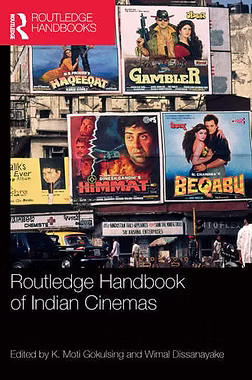
The Shifting Terrains of Nationalism and Patriotism in Indian Cinemas
Devadas, V. (2013). 'The Shifting Terrains of Nationalism and Patriotism in Indian Cinemas’, in Routledge Handbook of Indian Cinemas. Gokulsing. M and Dissanayake, W. (eds). Routledge, London and New York: 218-230

Panic watching: Consuming fictional pandemics during a real pandemic.
Platts, T. & Rutherford, A. (2022). Panic watching: Consuming fictional pandemics during a real pandemic. In S. Baker, A. Rutherford, R. Pamatatau. (Eds.). Contemporary horror on screen. Springer Nature.
Governing Indigenous Sovereignty: Biopolitics and the ‘Terror Raids’ in Aotearoa
Devadas, V. (2013).'Governing Indigenous Sovereignty: Biopolitics and the ‘Terror Raids’ in Aotearoa’, in The Fourth Eye: Māori Media in Aotearoa New Zealand. Hokowhitu, B. and Devadas, V. (eds). University of Minnesota Press, Minnesota: 3-24.

The Disney ‘princess bubble’ as a cultural influencer.
Rutherford, A. & Baker, S. (2021). The Disney ‘princess bubble’ as a cultural influencer. MC Media Culture Journal, 24(1).
“Is Edward Cullen a 'good' boyfriend: Young men talk about Twilight, masculinity and the rules of (hetero) romance
Vogels, C. (2017). “Is Edward Cullen a "good" boyfriend: Young men talk about Twilight, masculinity and the rules of (hetero)romance, Journal of Popular Romance Studies, 6.
https://www.jprstudies.org/2017/12/is-edward-cullen-a-good-boyfriend-young-men-talk-about-twilight-masculinity-and-the-rules-of-heteroromanceby-christina-vogels/